
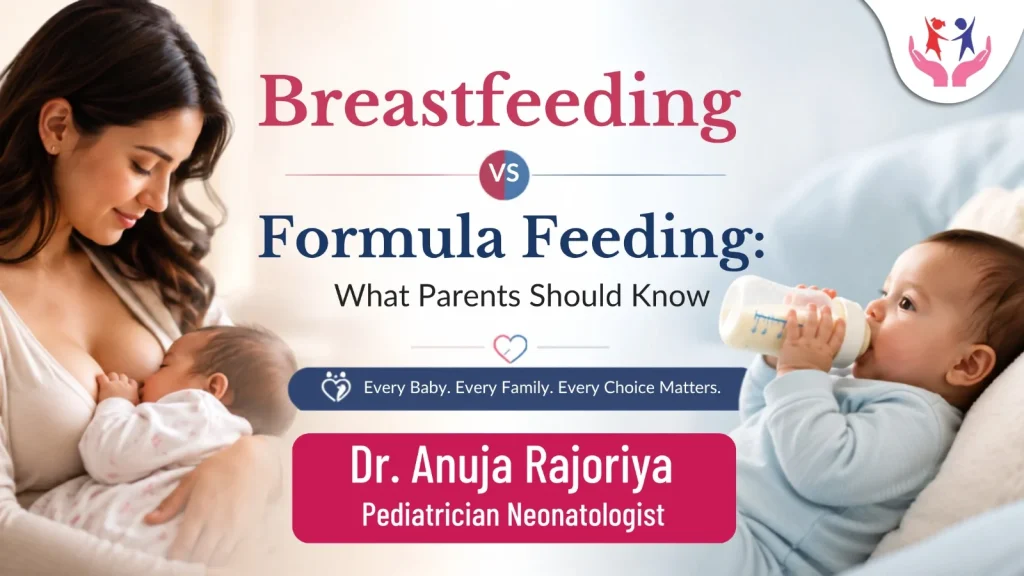
Choosing how to feed your baby is an important decision and many new parents wonder whether breastfeeding or formula feeding is better. According to Dr. Anuja Rajoriya, Best Pediatrician in Noida Extension , there is no single feeding plan that suits every family. A baby’s health, the mother’s health, milk supply, comfort and medical needs all matter. The main goal is to make sure your baby receives safe and adequate nutrition for healthy growth and development.
What Are the Benefits of Breastfeeding?
Breast milk is naturally made to meet a baby’s nutritional needs. It contains nutrients and antibodies that support growth and help the developing immune system.
Breastfeeding is associated with a lower risk of some infections and illnesses in babies. It can also offer health benefits to mothers.
The World Health Organization and the American Academy of Pediatrics recommend exclusive breastfeeding for about the first six months when possible. Around six months, suitable complementary foods can be introduced while breastfeeding may continue for two years or beyond, depending on the wishes of the mother and child.
Common Breastfeeding Challenges
Breastfeeding is natural, but that does not mean it is always easy. During the first few weeks, some mothers may experience:
- Difficulty with proper latching
- Sore or painful nipples
- Concerns about low milk supply
- Breast engorgement
- Difficulty feeding after a premature or complicated birth
- Problems maintaining feeding after returning to work
Early guidance from a pediatrician or lactation professional can often help. Parents should seek medical advice if the baby is not feeding properly, seems unusually sleepy, has noticeably fewer wet diapers or is not gaining weight as expected.
What Parents Should Know About Formula Feeding
Infant formula is designed to provide important nutrients needed for a baby’s growth when breastfeeding is not possible, not preferred or needs to be supplemented.
Formula feeding may be considered when:
- Breast milk supply remains insufficient despite support
- Breastfeeding is difficult for medical reasons
- The baby has particular nutritional or medical needs
- Parents choose formula for personal or practical reasons
- A doctor recommends supplementation
Some families use formula from birth, while others combine it with breast milk. Parents should be supported in making an informed feeding choice without unnecessary pressure or guilt.
Formula Feeding Safety Is Important
Correct preparation of formula is very important. Powdered infant formula is not sterile, so parents should wash their hands, use clean feeding equipment and follow the instructions on the container carefully.
Never add extra water or extra powder. Incorrect dilution can affect your baby’s nutrition and may be unsafe. Formula should also not be heated in a microwave because uneven heating can create hot spots that may burn the baby’s mouth.
Any formula left in the bottle after a feeding should be discarded rather than stored for the next feed.
Can Breastfeeding and Formula Be Combined?
Yes. Combination or mixed feeding means giving the baby both breast milk and infant formula.
Some mothers breastfeed for certain feeds and use formula at other times. Others may use expressed breast milk along with formula.
If maintaining breast milk supply is important to you, speak with your pediatrician or lactation professional before changing the feeding routine. They can guide you about breastfeeding frequency, pumping and supplementation.
How Can You Tell If Your Baby Is Feeding Well?
Instead of comparing your baby with another child, look at their overall feeding and growth. Helpful signs include:
- Regular wet diapers
- Active sucking and swallowing
- Baby appearing satisfied after most feeds
- Steady weight gain
- Appropriate growth during pediatric check-ups
Contact your pediatrician if your baby has difficulty feeding, repeated vomiting, poor weight gain, signs of dehydration or unusual sleepiness.
Breastfeeding vs Formula: Which Is Better?
Breast milk has unique nutritional and immune benefits, which is why major health organisations recommend breastfeeding when possible. However, infant formula can provide appropriate nutrition when it is needed or chosen and prepared safely.
The best feeding plan is one that keeps your baby properly nourished, growing well and regularly monitored while also taking the mother’s wellbeing and family circumstances into account.
Frequently Asked Questions
Exclusive breastfeeding is generally recommended for about the first six months. After that, age-appropriate complementary foods can be introduced while breastfeeding may continue.
Infant formula can be used safely when appropriate for the baby and prepared exactly according to instructions. Hygiene and correct preparation are especially important for very young or medically vulnerable babies.
Yes. Combination feeding is possible. Your pediatrician can help you create a feeding routine that meets your baby’s nutritional needs and supports breast milk supply if you want to continue breastfeeding.
Consult your pediatrician if your baby is feeding poorly, vomiting repeatedly, having fewer wet diapers than usual, appearing unusually sleepy or not gaining weight properly.
Every baby’s feeding journey is different. Parents should focus on safe nutrition, healthy growth and a feeding routine that works for both baby and family. For guidance about breastfeeding, formula feeding, combination feeding or your baby’s growth, parents can consult Dr. Anuja Rajoriya at Chubby Cheeks Kids Clinic & Vaccination Center, Best Pediatric Clinic In Noida Extension for personalised pediatric care and support.